PancakeSwap: A Comprehensive Guide to Decentralized Trading on BNB Chain /
Introduction :>
PancakeSwap is one of the most widely used decentralized exchanges (DEXs) in the crypto ecosystem, known for enabling users to trade digital assets without relying on a centralized intermediary. Built primarily on the BNB Chain, it has become a major hub for decentralized finance (DeFi) activity, especially for users seeking lower transaction fees and fast trade execution compared to some Ethereum-based alternatives.
What PancakeSwap Is ?
PancakeSwap is a decentralized exchange that allows users to swap tokens directly from their crypto wallets using automated smart contracts rather than traditional order books. Instead of matching buyers and sellers like a stock exchange, it uses an automated market maker (AMM) system. This means liquidity is provided by users who deposit token pairs into liquidity pools.
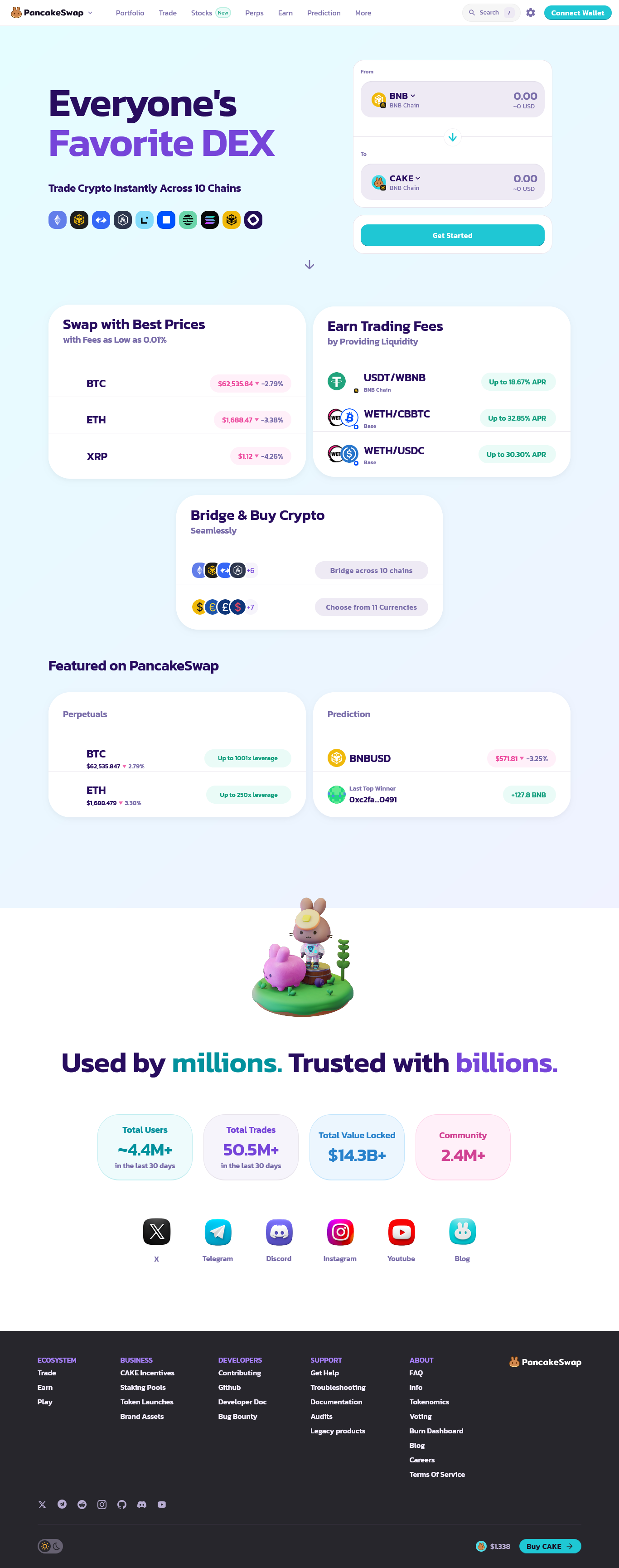
:> PancakeSwap Official Website :
In return, liquidity providers earn a portion of the trading fees generated by those pools. This model is a core building block of DeFi and removes the need for centralized custody of funds.
How It Works ://
At the heart of PancakeSwap is the AMM mechanism. Users trade against liquidity pools rather than other traders directly. Each pool contains two tokens, and prices are determined by a mathematical formula based on the ratio of those tokens in the pool.
To use the platform, users typically connect a crypto wallet such as MetaMask or Trust Wallet, select the tokens they want to swap, and confirm the transaction. The smart contract executes the trade automatically on-chain.
Because it runs on BNB Chain, transactions are generally faster and cheaper than those on networks like Ethereum, although this depends on network congestion.
The CAKE Token ://
PancakeSwap has its own native token called CAKE. It plays several roles within the ecosystem, including:
1. Governance: CAKE holders can vote on platform decisions.
2. Rewards: Users can earn CAKE by providing liquidity or staking tokens.
3. Incentives: It is used in yield farming and various platform reward mechanisms.
Over time, tokenomics have been adjusted to balance emissions and reduce inflation, reflecting the platform’s evolution as it matures.
Key Features ://
PancakeSwap has expanded far beyond simple token swaps. Some of its major features include:
1. Yield Farming: Users can stake LP (liquidity provider) tokens to earn CAKE rewards.
2. Staking Pools (Syrup Pools): A simplified way to earn rewards by staking CAKE directly.
3. Lottery and Prediction Markets: Gamified features that allow users to participate in prize-based systems.
4. NFT Marketplace: A platform for trading and collecting NFTs.
5. Perpetual Trading (on some versions/expansions): Advanced trading options for experienced users.
// These features aim to make PancakeSwap more than just a DEX, evolving it into a broader DeFi ecosystem.
Advantages ://
One of PancakeSwap biggest advantages is its low transaction cost compared to Ethereum-based DEXs. This makes it accessible to retail users who want to trade or experiment with DeFi without paying high gas fees.
It also benefits from a user-friendly interface, strong community adoption, and frequent feature expansion.
Risks and Limitations ://
Like all DeFi platforms, PancakeSwap comes with risks. Smart contract vulnerabilities, impermanent loss for liquidity providers, and market volatility are key concerns. Because it is non-custodial, users are fully responsible for securing their wallets and private keys.
Additionally, token incentives and yield farming rewards can fluctuate significantly, and returns are not guaranteed.
Conclusion ://
PancakeSwap has grown into a central player in the DeFi space by combining low-cost trading with a wide range of financial features. While it offers powerful tools for earning and trading crypto assets, it also requires users to understand the risks associated with decentralized finance.
As DeFi continues to evolve, PancakeSwap remains an important example of how decentralized exchanges can expand beyond simple swaps into full financial ecosystems.